LED Screen Size Matters More Than You Think
LED displays have become indispensable for stages, concerts, corporate events, trade shows, and worship services. The right LED screen size transforms the event visuals immersive and impressive. The wrong size can ruin the experience.
Choose a screen that is too small, and the audience in the back rows cannot see the content. Choose one that is too large, and the space feels cramped, viewing angles become distorted, and a significant portion of the audience sees a skewed image. LED display size directly determines whether your content connects with your audience.
This guide covers:
The most common LED screen dimensions on the market;
Popular LED wall size configurations for live events;
Why the 16:9 aspect ratio dominates;
How to calculate the right screen size for your venue and viewing distance.
Popular LED Display Sizes in the Market
LED displays are built from modular cabinets that connect to form larger screens. Understanding the standard cabinet sizes helps you plan your LED wall dimensions accurately.
1.500×500mm LED Display
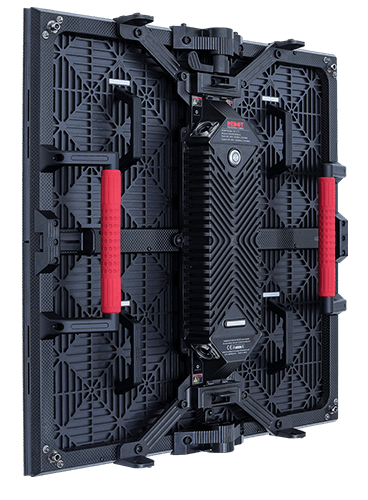
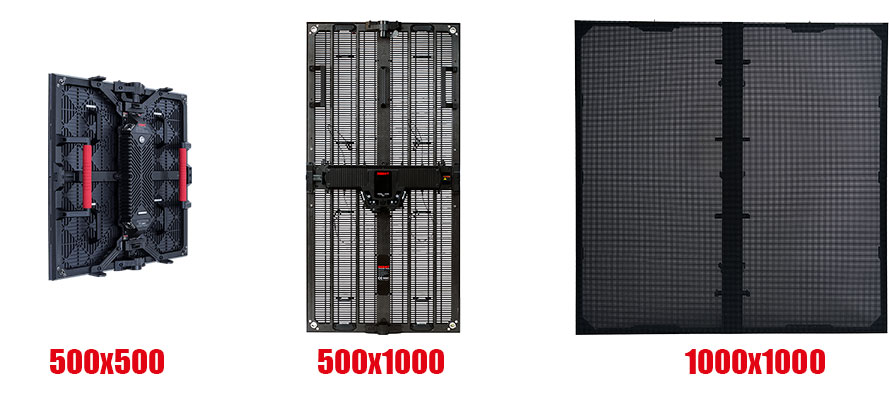
The 500×500mm cabinet is versatile and widely used formats in the industry. Its square shape makes it easy to build symmetrical walls, and it is compatible with a vast ecosystem of mounting hardware and rigging systems.
Best for: Indoor and outdoor stages, corporate events, trade show booths, and any application where square modularity is valued.
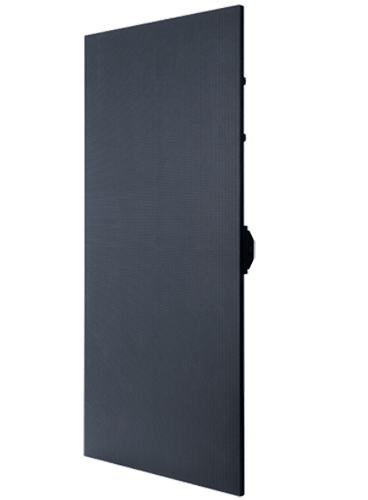
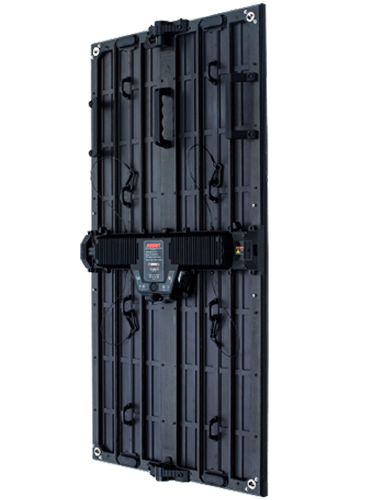
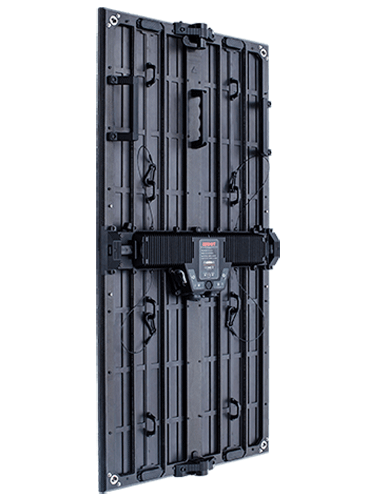
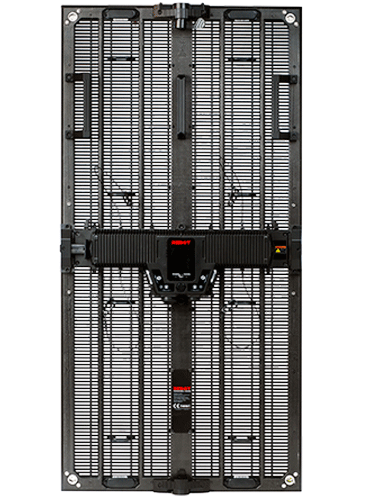
2.500×1000mm (and 1000×500mm) LED Display
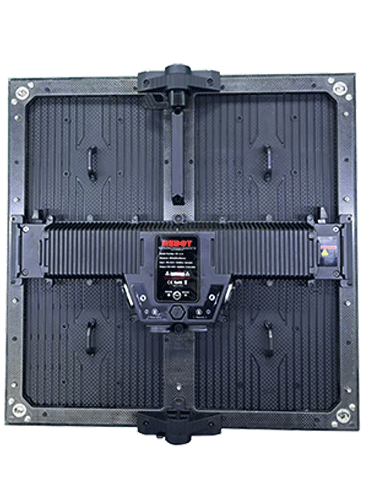
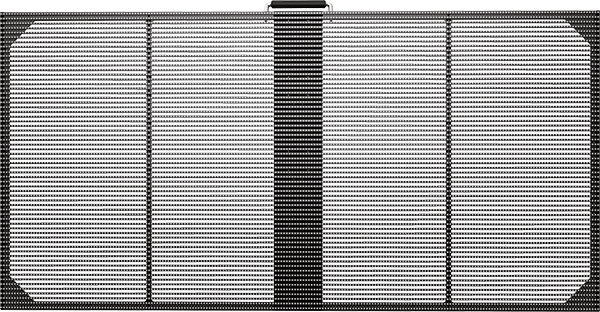
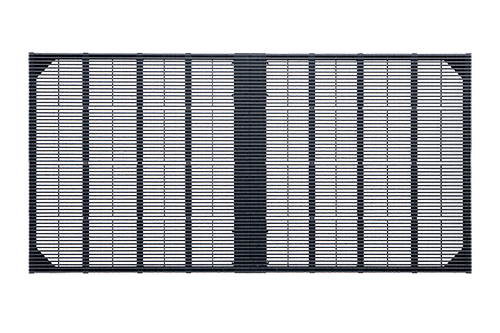
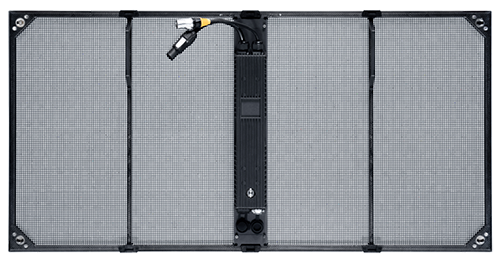
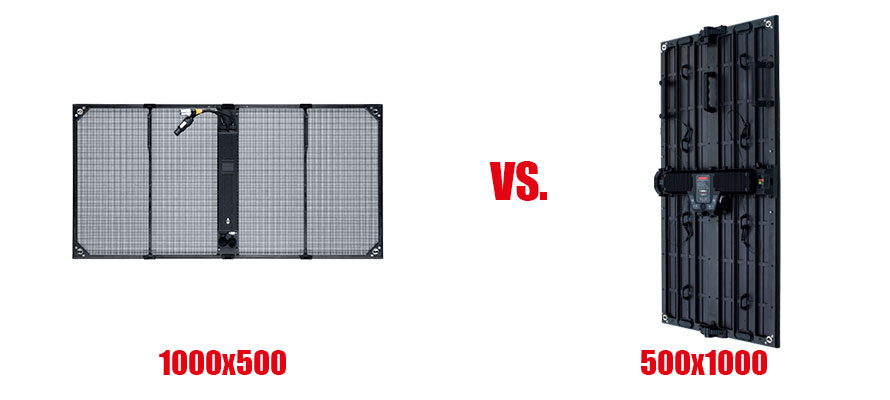
500×1000mm and 1000×500mm LED cabinets specify the width first; the former is 500mm wide, whereas the latter is 1000mm wide. These LED screens both offer greater flexibility and convenience for building LED screens. Combined with 500×500mm cabinets, 500×1000mm and 1000×500mm LED cabinets allow precise control over the final LED screen dimensions.
Best for: Rental and touring applications, outdoor events, and configurations that require non-square layouts.
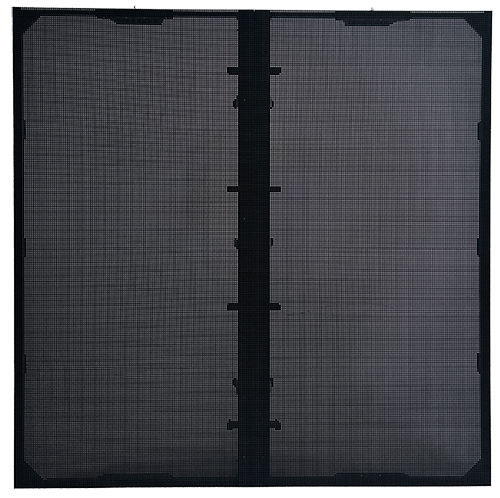
3.1000×1000mm LED Display
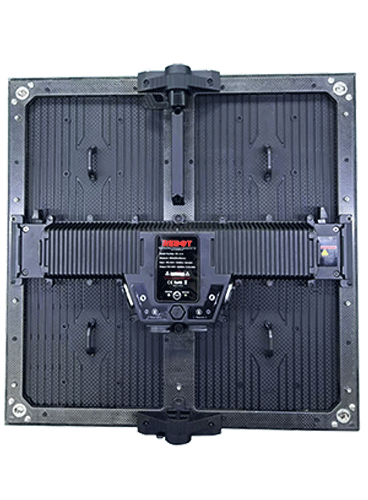
The 1000×1000mm cabinet is a large-format option for applications where fewer cabinet joints and faster assembly are priorities. Larger cabinets mean fewer connection points and quicker setup. This is a major advantage for large outdoor walls.
Best for: Large outdoor displays, indoor rentals and permanent installations where installation speed and structural simplicity matter.
Redot Visual offers all three cabinet sizes across its product lines, including the iHolo series RC-iLHolo3.9 and RC-iHolo3.9XL, outdoor rental series RC-M6.9 and RC-oL3.9. Whether you need a lightweight transparent display for indoor use or a robust outdoor screen, Redot has a solution in the size you need.
Common LED Wall Sizes for Events Today
While individual cabinet sizes are standardized, the assembled LED wall size varies widely depending on the application. Here are some common configurations used in the industry:
Application
|
Typical Screen Height
|
Typical Screen Width
|
Common Pixel Pitch
|
Corporate conference
|
2–3m
|
4–6m
|
P1.9–P2.6
|
Concert stage
|
4–6m
|
8–14m
|
P2.6–P3.9
|
Outdoor festival
|
6–10m
|
12–20m+
|
P3.9–P6.9
|
Trade show booth
|
2–3m
|
3–6m
|
P1.5–P2.6
|
Church sanctuary
|
2.5–4m
|
5–8m
|
P2.6–P3.9
|
These dimensions are starting points. The ideal LED wall dimensions depend on your venue’s physical constraints, audience seating depth, and content requirements.
Why 16:9 Is the Standard Aspect Ratio
Have you ever wondered why the 16:9 aspect ratio (1.7778:1) is the dominant format for video content worldwide? It is the native ratio for HD, Full HD, 4K, and 8K video. Let’s find the answer in the following content.
The Ergonomic and Technical Foundation
The 16:9 ratio is not arbitrary. Research in ergonomics found that the human field of vision forms a rectangle with a width-to-height ratio of approximately 16:9. This is why the format feels natural and comfortable to the human eye. It was adopted as an industry standard and has become the universal format for television, computer monitors, and smartphones.
Why It Matters for LED Displays
For LED video walls, using a 16:9-native configuration means:
Content displays correctly without letterboxing, cropping, or stretching;
No scaler required, the screen resolution matches the content resolution natively;
Full compatibility with PowerPoint slides, video files, and broadcast feeds.
Redot’s engineers can help you design an LED screen with a native 16:9 ratio by combining cabinet sizes appropriately. For projects that require non-standard ratios, we can also provide custom solutions.
When Non-16:9 Makes Sense
Not every LED wall size should be 16:9. Custom shapes, wide-format stage backdrops, and architectural installations often require non-standard ratios. In these cases, you can either create custom content for the screen’s native resolution or use a scaler to adapt standard content.
How to Choose the Right LED Screen Size
Selecting the right LED screen size comes down to three core factors:
1. Viewing Distance
The distance between the screen and the farthest viewer determines the minimum screen height and the required pixel pitch. For corporate events, a common guideline is that the farthest viewer should be no more than 8× the screen height away. So a 3-meter-tall screen works for an audience up to 24 meters deep.
Pixel pitch formula:
Optimal viewing distance (meters) = Pixel pitch (mm) × 2.5
Pixel Pitch
|
Optimal Viewing Distance (m)
|
Ideal Screen Height for 8m Depth
|
P1.9
|
~4.8m
|
~2.4m
|
P2.6
|
~6.5m
|
~3.2m
|
P3.9
|
~9.8m
|
~4.9m
|
P6.9
|
~17.3m
|
~8.6m
|
2. Venue Dimensions
Measure your space carefully:
Available height: ceiling clearance, truss height, or wall height;
Available width: stage width, wall width, or booth width;
Depth from stage to last row: determines the required screen height.
For flown installations, confirm the rigging capacity. For floor-supported installations, verify the floor's load capacity. If you are working with a historic building or a venue with strict load limits, Redot’s carbon fiber LED displays offer a lightweight solution that reduces structural stress.
3. Content Type
Different content types have different resolution requirements:
|
Content Type
|
Recommended Resolution
|
Notes
|
Text/Presentations
|
720p–1080p
|
Larger text is more readable
|
Images/Video
|
1080p–4K
|
Higher resolution for detail
|
Broadcast/IMAG
|
4K
|
Essential for camera work
|
For a rough estimate of the screen size needed to achieve a target resolution, use this guide:
|
Pixel Pitch
|
Screen Size for 1920×1080
|
P1.9
|
3.8 × 2.4m
|
P2.5
|
4.8 × 2.9m
|
P3.0
|
5.8 × 3.4m
|
P4.0
|
7.7 × 4.3m
|
Let Redot Help You Find the Perfect LED Screen Size
Choosing the right LED display size requires balancing viewing distance, venue constraints, content requirements, and budget. There is no simple “perfect” size, only the right size for your specific project.
The Redot Visual team specializes in developing and manufacturing high quality LED displays and we can also help clients analyze their projects and select the optimal LED wall dimensions. Whether you are buying LED displays for planning corporate conferences, outdoor festivals, trade show booths, or church installations, Redot team can recommend the most suitable configuration including pixel pitch, cabinet layout, and resolution.
Contact Redot Visual today to discuss your project. Our experts will help you find the right LED screen size for your audience, your venue, and your content.
 2026-09-22