 2026-07-02
The LED display industry is experiencing remarkable growth. From massive outdoor billboards and concert stage backdrops to indoor retail displays and corporate video walls, LED video wall panels are everywhere. As the technology becomes more accessible, more and more people are looking to enter the LED display business – whether as installers, rental providers, sales professionals, or end-users.
However, like any technology-driven industry, the LED display sector comes with its own specialized vocabulary. For newcomers, terms like pixel pitch, SMT, SMD, and 3-in-1 LEDs can feel overwhelming. Without clear explanations, these industry terms become barriers to understanding and effective communication.
Starting today, Redot is launching a series of articles dedicated to explaining the terminology relating to LED video wall panels. Our goal is simple: to help industry newcomers and aspiring LED business professionals build a solid foundation of knowledge. We believe that understanding these fundamental terms will help you communicate more effectively with suppliers, clients, and colleagues – and ultimately succeed in the LED display industry.
This is Part 1 of our series. In this article, we will cover 7 essential terms that every LED professional should know. Let us start.
LED stands for Light Emitting Diode.
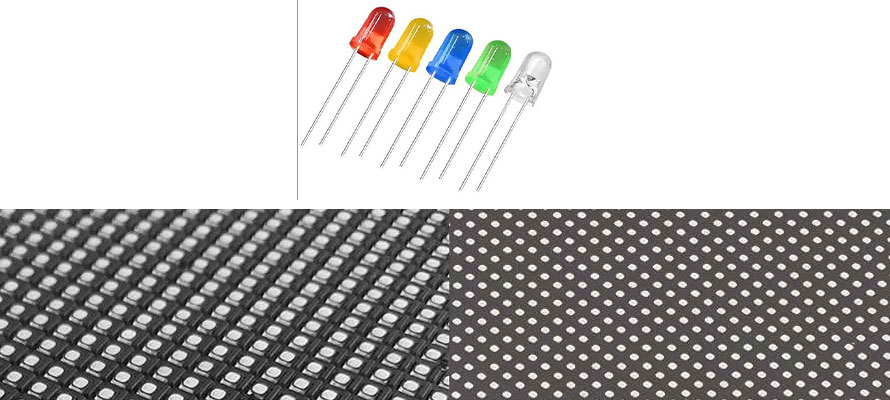
In the display industry, when we refer to “LED”, we are specifically talking about LEDs that emit light in the visible spectrum – the light that human eyes can see. LEDs are semiconductor devices that convert electrical energy into light. They are the fundamental building blocks of every LED display panel and LED screen panel on the market today.
A pixel (short for picture element) is the smallest light-emitting unit on an LED display. Each pixel is made up of one or more LEDs that produce light.
On a modular LED display panel, a pixel is the individual dot of light that, when combined with thousands or millions of other pixels, forms a complete image. This is exactly the same concept as the pixels on your computer monitor or television screen.
Key point: The more pixels an LED video wall has, the higher its resolution and the sharper the image.
Pixel pitch is the distance from the center of one pixel to the center of the adjacent pixel. It is measured in millimeters (mm).
Pixel pitch is one of the most critical specifications when choosing LED video wall panels because it determines the optimal viewing distance:
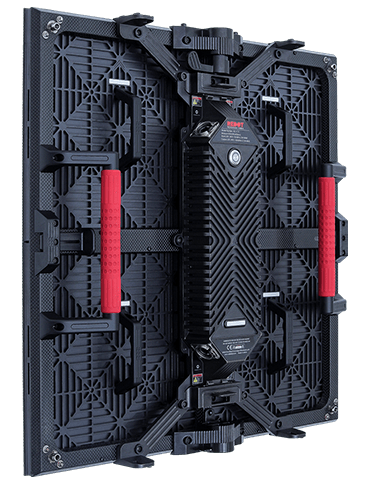
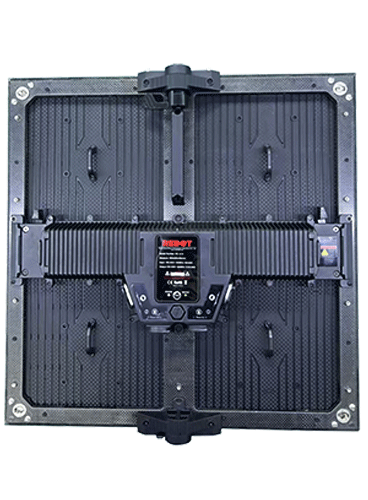
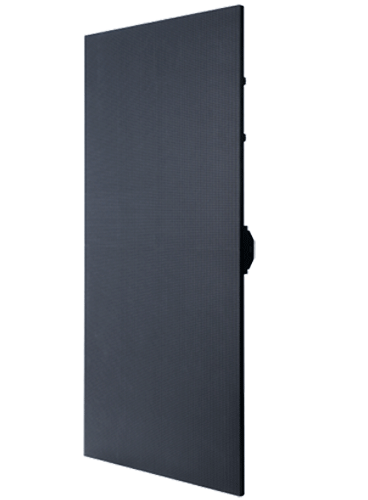
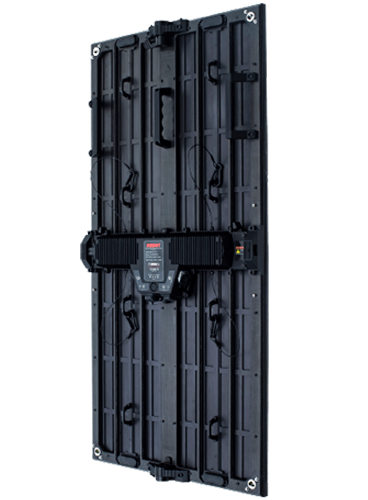
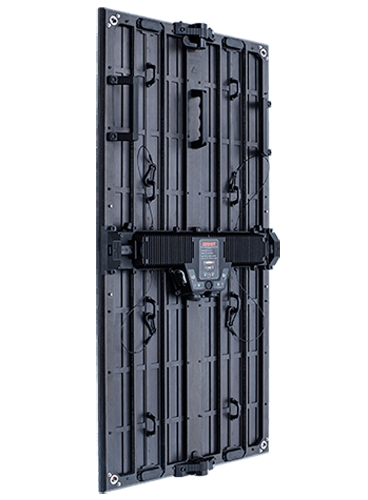
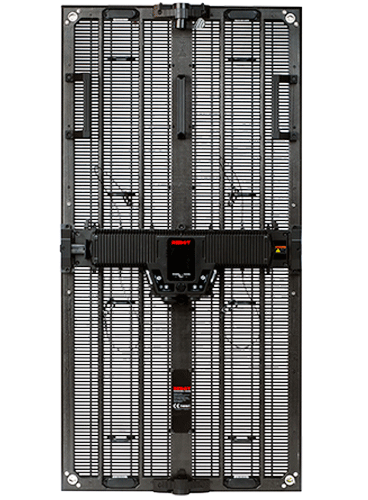
An LED panel, also called an LED cabinet, is a complete unit that includes:
Control system (receiving cards and cables).
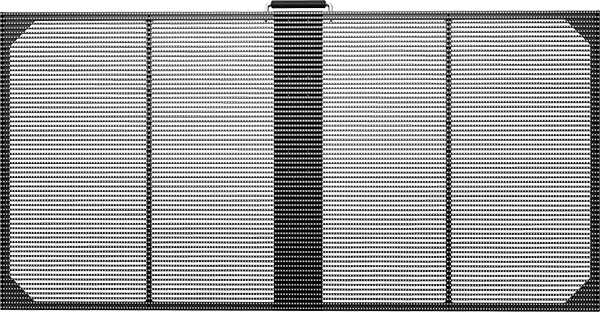
When you look at a large LED video wall, you are actually looking at an array of individual LED panels or cabinets that have been assembled together. Each cabinet is a modular building block.
These two terms are often mentioned together in the LED display industry, but they mean different things:
SMT stands for Surface Mount Technology. It is a manufacturing process in which electronic components are mounted directly onto the surface of a PCB (printed circuit board) without using through-hole technology. SMT is the most widely used assembly method in the electronics industry today because it allows for:
Smaller and lighter products.
Best suited for indoor applications – such as retail displays, control rooms, and corporate lobbies.
More sensitive to moisture and physical impact.
A 3-in-1 LED is a single LED package that contains three individual LED chips – one Red (R), one Green (G), and one Blue (B) – all encapsulated within the same lens or housing.
By mixing the light from these three primary colors, a 3-in-1 LED can produce a full spectrum of colors, including white. Each 3-in-1 LED serves as a single full-color pixel on the LED display.
Easier maintenance.
Thermal management complexity.
Despite these challenges, 3-in-1 LEDs have become the industry standard for high-quality modular LED display panels, particularly in indoor and rental applications where image quality and reliability are paramount.
This brings us to the end of Part 1 of our LED video wall panels terminology series. We have covered 7 essential terms that form the foundation of the LED display industry.
We will continue updating this series with clear, practical explanations including: Refresh rate and gray scale, common cathode vs. common anode, brightness (nits) and contrast ratio, LED display calibration and much more. If you are new to the LED display business, or if you simply want to deepen your technical knowledge, we invite you to follow our upcoming articles.